
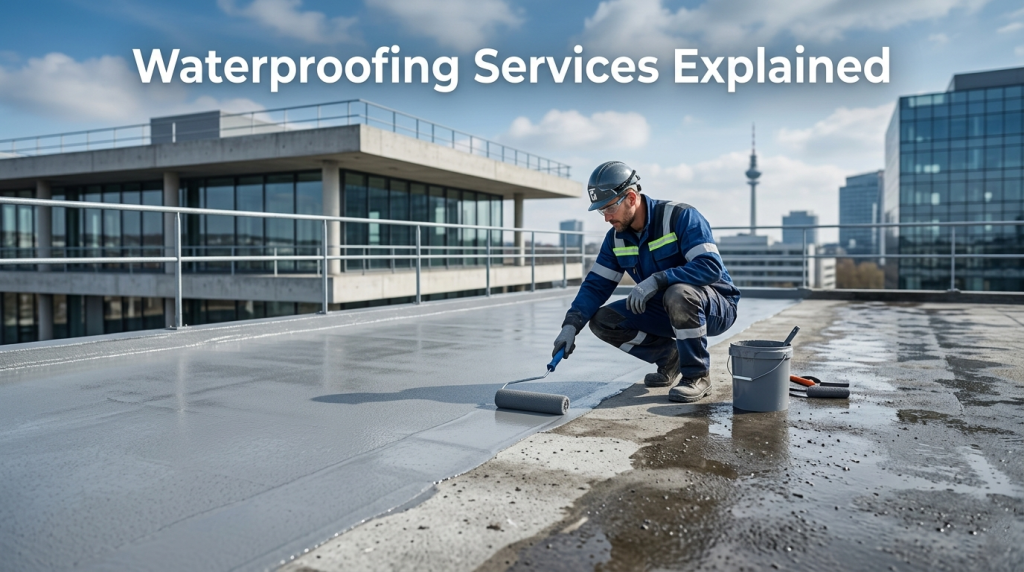
Waterproofing services explained means understanding how different waterproofing methods protect buildings from water damage, increase structural strength, and reduce long-term maintenance costs.
With increasing rainfall, humidity, and construction density, waterproofing has become a necessity. Today, waterproofing services in Noida and other urban regions are essential to prevent leakage, dampness, and structural deterioration.
What Are Waterproofing Services?
Waterproofing services are specialized solutions used to prevent water from entering and damaging a building’s structure. They create a protective barrier on surfaces such as roofs, terraces, basements, walls, and foundations to stop seepage, dampness, and leakage. You Should Check for signs of water damage in homes
These services use a combination of coatings, membranes, sealants, and chemical treatments, selected based on the type of surface and level of water exposure. Proper waterproofing not only blocks moisture but also strengthens the structure and improves its overall durability.
In construction and maintenance, waterproofing plays a crucial role in protecting buildings from long-term damage caused by rain, groundwater, and humidity, helping maintain both safety and property value.These indicators show that moisture has already started affecting the structure.
How Waterproofing Works
Waterproofing works by forming a protective barrier that blocks water entry and reduces moisture absorption.
- Prevents water from entering cracks and joints
- Creates a seamless layer over surfaces
- Protects internal materials like concrete and steel
- Reduces long-term wear and tear caused by moisture
In real-world construction projects, improper waterproofing is one of the most common reasons behind early building damage.
Types of Waterproofing Services Explained
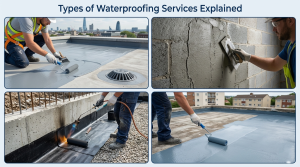
Choosing the right waterproofing method depends on structure, exposure, and budget. Each system targets specific moisture issues and needs proper application to work effectively.
The right choice prevents leaks and reduces costs, while the wrong one leads to damage and frequent repairs.
-
Liquid Waterproofing Membrane
This method involves applying a liquid coating that cures into a rubber-like waterproof layer.
- Provides seamless coverage without joints
- Adapts to surface movement and temperature changes
- Ideal for terraces, balconies, and roofs
It is widely used in residential buildings because of its flexibility and ease of application.
-
Cementitious Waterproofing
A cement-based coating applied mainly in internal wet areas.
- Common for bathrooms, kitchens, and water tanks
- Easy to apply and cost-effective
- Compatible with most construction materials
Most residential projects use this method for internal waterproofing due to its simplicity.
-
Bituminous Waterproofing
This method uses asphalt-based materials to create a strong waterproof barrier.
- Highly resistant to water penetration
- Suitable for roofs and foundations
- Long-lasting under harsh conditions
It is commonly used in commercial buildings where durability is a priority.
-
Polyurethane Waterproofing
A premium waterproofing solution used for exposed surfaces.
- High flexibility and crack-bridging ability
- Strong resistance to UV rays and weather
- Ideal for terraces and open roofs
Though slightly expensive, it offers long-term performance and reliability.
-
Basement Waterproofing Systems
Basements are highly vulnerable due to constant contact with groundwater.
- Prevents water seepage from soil
- Protects foundation strength
- Reduces mold and dampness
In urban areas, basement waterproofing is critical due to increasing underground construction.
Benefits of Waterproofing Services
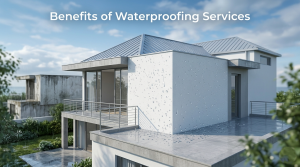
Waterproofing services offer long-term protection by preventing water-related damage and maintaining the overall condition of a property. From strengthening structural integrity to improving indoor living conditions, waterproofing plays a crucial role in reducing risks and ensuring durability. It not only helps avoid frequent repairs but also preserves the value and performance of the building over time. Here are some detailed benefits below .
Prevents Structural Damage
Water infiltration can weaken concrete and corrode steel reinforcements.
- Causes cracks and surface deterioration
- Reduces load-bearing capacity
- Leads to long-term structural issues
In real-world scenarios, structural repairs due to water damage are significantly more expensive than preventive waterproofing.
Reduces Repair Costs
Water damage often starts small but grows over time.
- Prevents repeated maintenance work
- Reduces expenses on painting and plastering
- Avoids major repair projects
Investing in waterproofing early helps save money in the long run.
Improves Indoor Health
Moisture creates ideal conditions for mold and bacteria growth.
- Affects air quality
- Causes respiratory discomfort
- Leads to allergies and irritation
According to World Health Organization damp indoor environments can increase the risk of respiratory diseases.
Increases Property Value
A well-maintained and waterproofed property attracts buyers.
- Reduces visible damage
- Improves overall appearance
- Enhances resale value
Most buyers prefer properties that show no signs of leakage or dampness.
Enhances Building Lifespan
Waterproofing protects building materials from long-term damage.
- Prevents deterioration of concrete and plaster
- Maintains structural integrity
- Extends the usable life of the building
Based on industry experience, waterproofed buildings require fewer major repairs over time.
Cost Factors of Waterproofing Services
Understanding cost factors helps property owners plan budgets more effectively and choose the right waterproofing solution based on long-term value—not just initial price.
Waterproofing costs are not fixed. They vary depending on multiple technical, structural, and environmental factors. Knowing these in advance helps avoid unexpected expenses and ensures better decision-making.
Type of Waterproofing Method
Each method has different pricing.
- Cementitious: affordable and basic
- Liquid membrane: mid-range
- Polyurethane: premium and durable
The choice depends on the area and required durability.
Area Size
The larger the area, the higher the cost.
- More material required
- Increased labor time
- Higher overall project expense
Surface Condition
Damaged surfaces require preparation before waterproofing.
- Crack repair
- Surface cleaning
- Leveling uneven areas
These additional steps increase the total cost.
Labor and Expertise
Quality of application directly impacts durability.
- Skilled professionals ensure proper sealing
- Poor application can lead to early failure
- Experienced contractors may charge more but deliver better results
In cities like Noida, choosing experienced providers for waterproofing services in Noida ensures better long-term performance.
Location and Accessibility
Certain areas are harder to work on.
- High-rise buildings
- Narrow or confined spaces
- Difficult access points
These factors increase labor complexity and cost.
When Should You Invest in Waterproofing?
Timing plays a crucial role in effectiveness.
- During construction for best results
- Before monsoon season
- During renovation projects
- At early signs of leakage
Most property owners delay waterproofing, leading to higher repair costs later.
Common Signs You Need Waterproofing
Early signs should not be ignored.
- Damp patches on walls
- Peeling paint or plaster
- White salt deposits on surfaces
- Musty smell indoors
- Water stains on ceilings
- Mold growth in corners
These indicators show that moisture has already started affecting the structure.
Explore professional waterproofing solutions here: Ronika Buildcare & Waterproofing Co.
FAQ Section
What are waterproofing services?
Waterproofing services prevent water from entering a building, protecting it from structural damage and dampness.
Which waterproofing method is best?
The best method depends on the area and exposure. Liquid membranes work well for roofs, while cementitious coatings are ideal for bathrooms.
How much do waterproofing services cost?
Costs vary based on method, area size, and surface condition. Larger or damaged areas cost more.
Is waterproofing necessary for new buildings?
Yes, early waterproofing prevents future leakage and reduces maintenance costs.
How long does waterproofing last?
Most waterproofing solutions last between 5 to 15 years depending on materials and application quality.