
Introduction
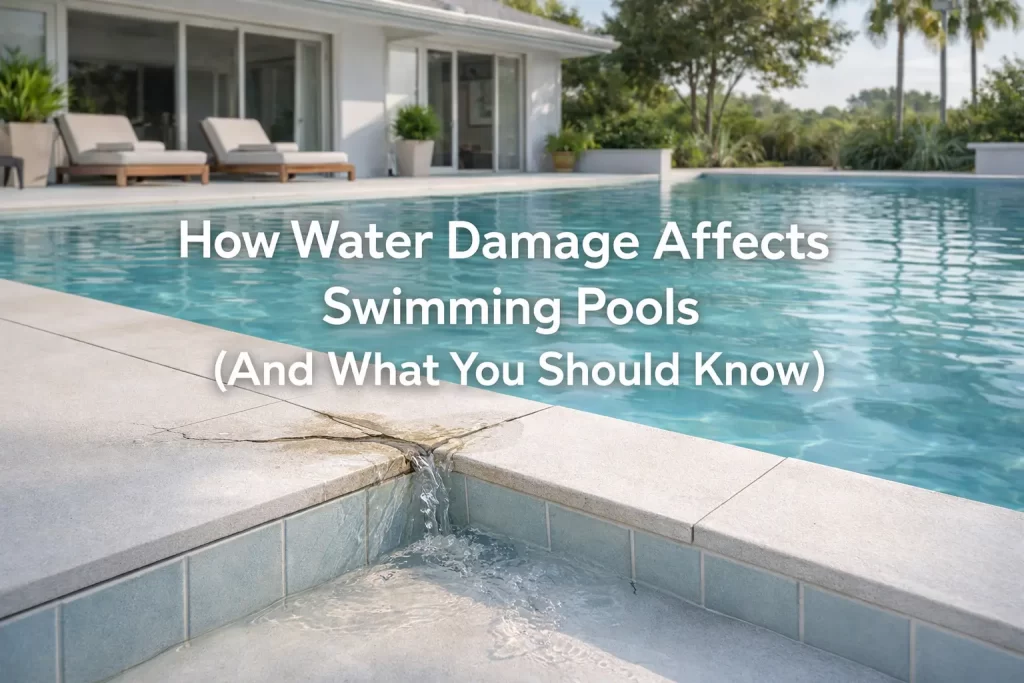
Swimming pools are built to contain water, but without proper protection, water itself becomes the biggest threat to their durability. One of the most overlooked yet critical issues in pool construction and maintenance is swimming pool water damage effects, which can silently weaken the structure, increase long-term costs, and lead to major repairs.
Water damage does not appear suddenly. It begins at a microscopic level—through pores in concrete, weak construction joints, or failed waterproofing layers. Over time, this hidden seepage develops into cracks, leakage, tile detachment, and internal structural damage. Most pool owners only recognize the issue when visible damage appears, by which time the repair costs are significantly higher.
Environmental factors such as groundwater pressure, temperature changes, and continuous exposure to water further accelerate deterioration, as explained in water quality and structural durability guidelines. Without proper waterproofing, these forces continuously weaken the pool structure.
Understanding these effects is essential to prevent costly failures and extend the lifespan of your swimming pool.
Quick Answer Summary
Swimming pool water damage effects include structural cracks, leakage, tile damage, corrosion of reinforcement, and rising maintenance costs. It usually starts with minor seepage but can lead to major structural damage if not prevented with proper waterproofing.
What Causes Swimming Pool Water Damage Effects?
Water damage in swimming pools typically results from multiple factors working together over time.
Structural Weakness and Construction Defects
Poor construction practices create the foundation for future damage. Improper concrete mixing, rushed curing, or weak joint sealing can leave the structure vulnerable.
How Structural Flaws Develop
Concrete contains microscopic pores. Without sealing, water enters these pores and gradually expands them under hydrostatic pressure.
Role of Environmental Stress
Temperature changes cause expansion and contraction, increasing stress on already weak areas and accelerating crack formation.
Long-Term Impact of Construction Issues
If ignored:
- Cracks expand
- Leakage increases
- Internal materials weaken
- Structural lifespan reduces
How Swimming Pool Water Damage Effects Impact Structure
Water damage affects both internal and external components of the pool.
Cracks, Leakage, and Material Deterioration
Water infiltration weakens the bonding of construction materials and leads to progressive damage.
Micro-Cracks Turning into Major Failures
Small cracks allow water entry, which:
- Increases internal pressure
- Expands cracks
- Leads to visible leakage
Continuous Damage Cycle
Water enters → pressure builds → cracks expand → more water enters.
This cycle continues until major damage occurs.
Corrosion of Reinforcement Materials
Steel inside concrete reacts with water, leading to:
- Rust formation
- Expansion of steel
- Internal cracking
Signs of Water Damage in Swimming Pools
Early detection can prevent expensive repairs.
Visible Warning Signs
These are easy to identify and should not be ignored.
Common Surface Indicators
- Cracks in walls or floor
- Loose or broken tiles
- Wet patches around the pool
- Algae growth in unusual areas
Why These Signs Matter
They indicate that water is escaping the structure and damage is already in progress.
Hidden Warning Signs
Some damage is not immediately visible but equally important.
Indirect Indicators
- Sudden drop in water level
- Higher water bills
- Chemical imbalance
- Reduced filtration efficiency
Early Detection Importance
Identifying these early can prevent structural failure and reduce repair costs.
Impact on Maintenance and Long-Term Costs
Water damage directly increases operational expenses.
Rising Maintenance Costs
Even small leaks can lead to significant water loss over time.
Chemical Imbalance Issues
Water leakage disturbs the chemical balance, resulting in:
- Increased chemical usage
- Poor water quality
- Frequent adjustments
Cost Implication
Over time, chemical costs alone can become a major expense.
Equipment Damage and Efficiency Loss
Pool systems are designed for stable conditions.
Impact on Filtration System
Fluctuating water levels affect the pool filtration system, causing:
- Pump inefficiency
- Air intake issues
- Increased wear
Long-Term Effect
Equipment lifespan reduces, increasing replacement costs.
Why Waterproofing Is Essential for Swimming Pools
Waterproofing is the primary defense against water damage.
Role of Waterproofing Systems
It creates a barrier that prevents water from penetrating the structure.
Types of Waterproofing Methods
- Cementitious waterproofing
- Liquid membranes
- Crystalline waterproofing
Application Importance
Proper application ensures long-term protection and durability.
Benefits of Waterproofing
Structural and Financial Benefits
- Prevents leakage
- Improves durability
- Reduces maintenance costs
- Extends lifespan
Long-Term Value
Investing in waterproofing saves significantly on future repairs.
Common Waterproofing Failures You Should Know
Even waterproofing can fail if not done correctly.
Causes of Failure
Common Mistakes
- Poor surface preparation
- Wrong material selection
- Improper application
Resulting Problems
Leads to recurring leakage and repeated repair costs.
Preventing Swimming Pool Water Damage Effects
Prevention is always more cost-effective than repair.
Proactive Maintenance Strategies
Routine Inspection Checklist
- Monitor water levels
- Inspect tiles and joints
- Check for damp areas
- Evaluate system performance
Consistency is Key
Regular inspections help detect problems early.
Importance of Professional Inspection
Advanced Detection Methods
- Leak detection systems
- Pressure testing
- Structural analysis
Accuracy Advantage
Professionals identify hidden issues that are not visible during routine checks.
If you want expert help implementing these strategies, explore
swimming pool waterproofing services
FAQ Section
How do I know if my swimming pool is leaking or just losing water naturally?
Evaporation is normal, but excessive loss may indicate leakage. A bucket test helps compare water loss and identify leaks accurately.
Can a small crack in a swimming pool cause serious damage?
Yes, small cracks allow water to seep in, which expands over time and weakens the structure.
Why does my pool keep losing water even after repairs?
This happens when the root cause is not fixed, such as poor waterproofing or hidden structural leaks.
Is waterproofing necessary for all swimming pools?
Yes, waterproofing prevents seepage, improves durability, and reduces long-term costs.
What happens if I ignore water damage in my pool?
Ignoring it leads to structural weakening, increased leakage, and expensive repairs over time.
